Showing posts with label photography. Show all posts

Monday, September 2, 2013

Love’s Labour’s Lost

From women’s eyes this doctrine I derive:
They sparkle still the right Promethean fire;
They are the books, the arts, the academes,
That show, contain, and nourish all the world.
          Love’s Labour ’s Lost. Act iv. Sc. 3.


A new round of art-making is soon to begin for the upcoming Rooftop Art Show at the Luggage Store Annex which will open on Saturday, November 9.  It would be good to take a look back at how we came to settle on “A Slice of Life” as the title for our show.

In late July 1973, Joseph Crachiola was wandering the streets of Mount Clemens, Mich., a suburb of Detroit, with his camera. As a staff photographer for the Macomb Daily, he was expected to keep an eye out for good feature images — "those little slices of life that can stand on their own."

Joe Crachiola/Courtesy of The Macomb Daily

At the time, we were looking at how we might be able to use Edward Steichen's, The Family of Man, both the exhibit and the book, as a master work of art that could help students to understand the art of  the curating and designing an exhibit.  The Family of Man uses photography to explore all aspects of life.
The exhibition was created by Edward Steichen as a collection of snapshots and emotions that aimed to convey a message of peace in the midst of the Cold War. While the collection still bears the traces of its context of creation, visitor reactions continue to reflect the impact of these images, which remain relevant to this day. Some have even become icons in the history of photography. 
According to Edward Steichen himself, The Family of Man was the most significant work of his career. In a manner that was both unusual and visionary at the time, the collection condensed his approach to photography as well as his understanding of settings: the photographs were chosen according to their capacity of communication, while the layout allowed visitors to immerse themselves in a photographic essay. The collection embodies an astonishing summary of Steichen's career as an exhibition curator at MoMA.

Steichen's brother in law, Carl Sandburg, famed American poet and winner of the Pulitzer Prize for poetry in 1951 wrote the text below as a prologue to the Family of Man exhibition.  It seems appropriate to share the words and perspective of "The Poet of the People" on this Labor Day.


Endpapers for hardback book of The Family of Man, published in 1955.

PROLOGUE by Carl Sandburg 


The Family of Man 
The photographic exhibition created by Edward Steichen 
for The Museum of Modern Art, New York, 1955
The first cry of a newborn baby in Chicago or Zamboango, in Amsterdam or Rangoon, has the same pitch and key, each saying, “I am! I have come through! I belong! I am a member of the Family.” 
Many the babies and grownups here from photographs made in sixty-eight nations round our planet Earth. You travel and see what the camera saw. The wonder of the human mind, heart, wit and instinct, is here. You might catch yourself saying, “I’m not a stranger here.” 
People! flung wide and far, born into toil, struggle, blood and dreams, among lovers, eaters, drinkers, workers, loafers, fighters, players, gamblers. Here are ironworkers, bridgemen, musicians, sandhogs, miners, builders of huts and skyscrapers, jungle hunters, landlords and the landless, the loved and the unloved, the lonely and abandoned, the brutal and the compassionate—one big family hugging close to the ball of Earth for its life and being. 
Here or there you may witness a startling harmony where you say, “This will be haunting me a long time with a loveliness I hope to understand better.”
In a seething of saints and sinners, winners or losers, in a womb of superstition, faith, genius, crime, sacrifice, here is the People, the one and only source of armies, navies, work-gangs, the living flowing breath of the history of nations, ever lighted by the reality or illusion of hope. Hope is a sustaining human gift. 
Everywhere is love and love-making, weddings and babies from generation to generation keeping the Family of Man alive and continuing. Everywhere the sun, moon and stars, the climates and weathers, have meanings for people. Though meanings vary, we are alike in all countries and tribes in trying to read what sky, land and sea say to us. Alike and ever alike we are on all continents in the need of love, food, clothing, work, speech, worship, sleep, games, dancing, fun. From the tropics to arctics humanity lives with these needs so alike, so inexorably alike. 
Hands here, hands gnarled as thorntree roots and others soft as faded rose leaves, Hands reaching, praying and groping, hands holding tools, torches, brooms, fishnets, hands doubled in fists of flaring anger, hands moving in caress of beloved faces. The hands and feet of children playing ring-around-a-rosy—countries and languages different but the little ones alike in playing the same game. 
Here are set forth babies arriving, suckling, growing into youths, restless and questioning. Then as grownups, they seek and hope. They mate, toil, fish, quarrel, sing, fight, pray, on all parallels and meridians having likeness. The earliest man, ages ago, had tools, weapons, cattle, as seen in his cave drawings. And like him the latest man of our day has his tools, weapons, cattle. The earliest man struggled through inexpressibly dark chaos of hunger, fear, violence, sex. A long journey it has been from that early Family of Man to the one of today which has become a still more prodigious spectacle. 
If the human face is “the masterpiece of God” it is here then in a thousand fateful registrations. Often the faces speak what words can never say. Some tell of eternity and others only the latest tattlings. Child faces of blossom smiles or mouths of hunger are followed by homely faces of majesty carved and worn by love, prayer and hope, along with others light and carefree as thistledown in a late summer wind. Faces having land and sea on them, faces honest as the morning sun flooding a clean kitchen with light, faces crooked and lost and wondering where to go this afternoon and tomorrow morning. Faces in crowds, laughing and windblown leaf faces, profiles in an instant of agony, mouths in a dumb show mockery lacking speech, faces of music in gay song or a twist of pain, a hate ready to kill, or calm and ready-for-death faces. Some of them are worth a long look now and deep contemplation later.  Faces betokening a serene blue sky or faces dark with storm winds and lashing night rain. And faces beyond forgetting, written over with faiths in men and dreams of man surpassing himself. An alphabet here and a multiplication table of living breathing human faces. 
In the times to come as the past there will be generations taking hold as though loneliness and the genius of struggle has always dwelt in the hearts of the pioneers. To the question, “What will the story be of the Family of Man across the near or far future?” Some would reply, “For the answers read if you can the strange and baffling eyes of youth.”
There is only one man in the world
and his name is All Men. 
There is only one woman in the world
and her name is All Women.
There is only one child in the world
and the child’s name is All Children.  
A camera testament, a drama of the grand canyon of humanity, an epic woven of fun, mystery and holiness—here is the Family of Man!

Monday, August 19, 2013

Inside Out 11M

The Inside Out Photo Booth truck arrived in San Francisco in July, and they set up in front of City Hall for Inside Out 11M, inviting all to join in this nationwide participatory art initiative aimed at creating a portrait of America that includes immigrants and the descendants of immigrants alike.

 Inside Out is a global participatory art project initiated by the award-winning artist JR to pay tribute to the power and dignity of individuals by displaying their portraits in public spaces around the world. People share their untold stories and transform messages of personal identity into works of public art.


Young and old alike are invited to participate. 

Even the Mayor Lee came by to have his photo taken.

People were invited into the photo booth to have a seat.

Say Cheese! Then back outside to wait for your photo to come out.


Once the portrait was printed, volunteers were pasting them on long runners. 


One global project meets another.
A Blue Marble for Rhea who printed out a couple of Inside Out backdrops for us.  


 We will be setting up our own Photo Booth to invite the Rooftop community to participate in JR's Inside Out 11M project.

Once we forward our photo files on to the Inside Out team, and they will send back large scale prints for display. The photos that we gather will be used in our upcoming art show at the Luggage Store Annex in the Tenderloin, the neighborhood that is home for many newly arrived immigrants to San Francisco.

Saturday, August 10, 2013

Eyes are a Window to the Soul

In 2011, JR made his TED Prize wish:

"I wish for you to stand up for what you care about by participating in a global art project, and together we'll turn the world...INSIDE OUT."


Since JR made his wish, The INSIDE OUT project has traveled from Ecuador to Nepal, and Mexico to Palestine, inspiring group actions on varied themes such as hope, diversity, gender-based violence, and climate change. Over 110,000 portraits have been pasted in 108 countries worldwide. An HBO documentary feature on the project is due for worldwide release this Spring.


INSIDE OUT 11M brought the project to the Bay Area via Photo booth Trucks, giving us two backdrops that we can use for our photo booths at Rooftop.

Two years later, in 2013:
A fresh photo via Facebook of JR's pasting project in Kenya.
JR posts: 
Just received this areal view from Kenya! My team just finished installing 4000 meter square of images printed on vinyl to protect the roof of the community against the rain. This is not part of the art project "Women Are Heroes" we did 4 years ago and that is still visible on this image. Since 4 years ago, we go back every year and that's what you can see on this image.. the difference of black and white is due to how long they have been put up  This is done with no autorisation except the one of the community and with no other financing than what we raise via my artworks... Congrats to the team for helping the 40 men on the ground who put it up for their neighberhood. As one women told me years ago in Kibera " Art can be useful"  #Kenya


Friday, August 2, 2013

If you walk across my camera


“If you walk across my camera I will flash the world your story.” 


― Woody Guthrie


The First 10,000 photography blog's name comes from a quote by photographer Henri Cartier-Bresson, “Your first 10,000 photographs are your worst.”  The blog devoted a bit of space to consider what a photographer could learn from Guthrie.
There’s a simplicity and honesty to Woody’s work that isn’t such a bad quality to have if you’re a photographer. And a lot of the singer’s other qualities — the sense of humor, the willingness to collaborate, and an ability to get new things out of old subjects — would probably serve you well, too. But there’s another lesson lurking in all of this as well: perhaps the single most important thing to have in your kit isn’t your lenses, your flash, batteries, memory cards, air blower, or even your camera. Pack your curiosity first and you’ll be amazed at how much better the rest of your kit — whether it’s the physical one or the metaphysical one — works as a result.

*******


Photographer Jenna Pope is an activist and award-winning freelance photographer living in New York City. As a born and raised Wisconsinite, she became involved in the Wisconsin Uprising in the Winter of 2011, and spent many nights sleeping on the floor of the State Capitol Building. That was just her first taste of activism, and has been fighting for social and economic justice ever since. As she began taking photos at a very young age, there was no question that she needed to combine her photography experience with activism.

In 2011, Jenna began documenting the protests in Wisconsin's State Capitol. In November, she quit her job to work full time in support of efforts to recall Governor Scott Walker. Supported by donations from people who would like to support her efforts, she began her full-time journey to document social protest movements around the world.


sharing the view from her roof in Harlem

Out. Of. Focus.


You can support photographer Jenna Pope's work by making a donation here.


*******


“My eyes has been my camera taking pictures of the world and my songs has been my messages that I tried to scatter across the back sides and along the steps of the fire escapes and on the window sills and through the dark halls…”


― Woody Guthrie


This Land is Your Land


Photographer Jenna Pope took this photo of a group of women known as the Raging Grannies at this week's Solidarity Sing-Along in the Wisconsin State Capitol.

There are chapters of Grannies all over the world, “out in the streets promoting peace, justice, social and economic equality through song and humour.” The original group of Raging Grannies was formed in 1987 in Victoria, British Columbia, but today you can find "gaggles of Grannies" throughout Canada, Australia, Israel, Scotland, and the United States.  The Raging Grannies have a database of 450 song lyrics on their website that can be used “non-commercially as a form of protest, and not for entertainment,” which states, “You’ve come to the right place if you’re looking for a song to express your outrage about all of those things that threaten our grandchildren’s futures — pollution, militarism, greed, ‘isms and more.”

The Raging Grannies were in the Wisconsin State Capitol in Madison to participate in The Solidarity Sing-Along, which has been happening every week day during the noon hour since Friday, March 2011.  Last week, Capitol Police began enforcing the administrative code which says that groups of 20 or more are required to get a permit.


Jenna was there on August 1st to document some of the 23 citations that were given to both participants and tourists who were there observing the Sing-Along.

A tourist from Arizona is warned that she will be arrested if she doesn't stop singing along.

The Raging Grannies sing this verse to the tune of Woodie Guthrie's This Land Is Your Land:

In the squares of the city, 
in the shadow of the steeple 
In the Capitol, I seen my people 

And some are grumblin’ 
and some are wonderin’ 
If this land’s still made for you and me


© Copyright 1956 (renewed), 1958 (renewed), 1970 and 1972 by Woody Guthrie Publications, Inc. & TRO-Ludlow Music, Inc. (BMI)


Woodie Guthrie's song, This Land Is Your Land, was actually the very first song that the founders of Rooftop School considered when they were looking for a song that the community could sing each day at Morning Circle. 

As I went walking I saw a sign there
And on the sign it said "No Trespassing."
But on the other side it didn't say nothing,
That side was made for you and me.


*******

“Anybody got a rock?
There’s a window back here that needs to be opened!” 


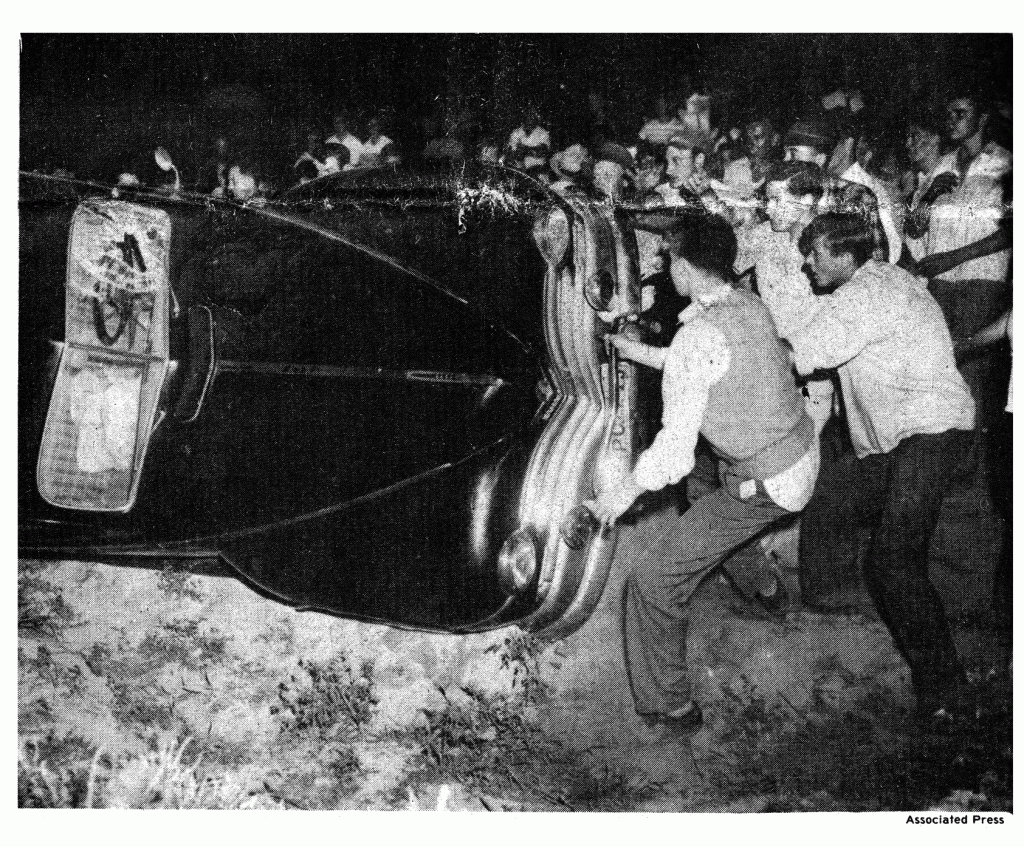
— Woodie Guthrie joked and sang, “We Shall Not Be Moved,” when his car was surrounded by an angry mob after a performance in Peekskill, New York.  


The 1949 outdoor concert with Guthrie, Pete Seeger, Harry Belafonte and Paul Robeson, benefitting the Civil Rights Congress, prompted one of the ugliest days in music's history. Known as The Peekskill Riots, angry locals from Westchester County New York took to throwing racial slurs and rocks in response to Paul Robeson's scheduled performance at an open-air concert in Lakeland Acres, north of Peekskill, on September 4th, 1949.


*******

There is a long history of social protest through song in America. The civil rights movement used songs as an expression of dissent, and this tradition has been carried forward with every movement thereafter. Rooftop School began exploring this history with Marcus Shelby's oratorio, Soul of the Movement: Meditations on Dr. Martin Luther King, Jr. 

“With this music, a rich heritage from our ancestors who had the stamina and moral fiber to be able to find beauty in broken fragments of music, whose illiterate minds were able to compose eloquently simple expressions of faith and hope and idealism, we can articulate our deepest groans and passionate yearnings-and end always on a note of hope that God is going to help us work it out, right here in the South where evil stalks the life of a Negro from the time he is placed in the cradle.  Through this music, the Negro is able to dip down into wells of a deeply pessimistic situation and danger-fraught circumstances and bring forth a marvelous, sparkling, fluid optimism.  He knows it is still dark in his world, but somehow, he finds a ray of light”.

— Dr. Martin Luther King, Jr.


Thursday, July 25, 2013

The Open Windows of Science

“Even if the open windows of science at first make us shiver after the cozy indoor warmth of traditional humanizing myths, in the end the fresh air brings vigor, and the great spaces have a splendor of their own.”

— Bertrand Russell, What I Believe, 1925

*******

Ten startlingly beautiful images of viruses, cells, and proteins — some more than 7 feet in diameter and others 7 feet square — greet people passing the David H. Koch Institute for Integrative Cancer Research in Kendall Square.
“These are windows into what we do,’’ said Robert Urban, executive director of the Koch, which will be dedicated today. “These are a storefront. You can imagine what’s going on here by looking through that window.’’

*******


When Volker Steger was given the assignment to take portraits of a dozen Nobel Prize winners in science, he decided to conduct an experiment. He asked the scientists to draw their award winning discoveries. 
“Nobody gets a prior warning. That is essential. I don’t want to get another Powerpoint presentation,” says Steger. “They come in, surprised by the lights and the setup. Then, I simply ask them to ‘make a drawing of what you got the Nobel Prize for.’”
Sir Timothy Hunt, the 2001 Nobel Prize winner in physiology or medicine, in his introduction to Sketches of Science, writes, ”There’s a playfulness about these portraits that’s quite beguiling, and unlike most official portraits of these distinguished people, there are hints that they don’t all take themselves that seriously, knowing very well that great discoveries result from a considerable degree of luck, as well as prepared minds.”

Sir Harold Kroto, 1996 Nobel Prize winner in chemistry.
Kroto and his colleagues earned the award for their discovery of fullerenes.
© Volker Steger
*******


The Blue Marble visits the Exploratorium

In museums, schools, and research facilities, scientists and artists are swapping methods to illuminate natural phenomena and solve global problems. 

— quotes from ARTnews “Under the Microscope” by Suzanne Muchnic 
“This pairing of art and science is sort of inevitable if you look at the whole history of modernism,” Nowlin adds. “You can follow the progression from painting as a frame or window through which you look into a fictional space, with the perspective shortened, to Mondrian and Malevich, when the painting was an object in real space. And that continued with Marcel Duchamp, Kurt Schwitters, Jasper Johns, Robert Rauschenberg, and Frank Stella. Not only was the painting an object on the wall, but the painting moved physically into real space. And science has always been about real space.”
— Stephen Nowlin, director of the Alyce de Roulet Williamson Gallery at Art Center College of Design
“They engage with ideas that are floating around, ways of thinking about in- formation, systems, and materials. At a certain point, that permeates into the milieu as a whole.”
— Evan Ziporyn, composer, clarinetist, director of MIT’s Center for Art, Science & Technology

*******


Proclaim it to everyone everywhere:
"On this day, at this time, you, the Earth and everybody on it will have their picture taken
... from a billion miles away!"

— Carolyn Porco, Planetary scientist, Cassini imaging lead


The Blue Marble waves on July 19, 2013 at 2:33:57 PM
when Cassini took a photo of the Earth.
#DayEarthSmiled #WaveatSaturn

Monday, July 22, 2013

The Family of Man

In 1955, a decade into the Cold War, the Museum of Modern Art in New York opened its doors to a monumental photography exhibition, an aesthetic manifesto visualizing ideas of peace and “the essential oneness of mankind.” Edward Steichen, then director of the MoMA photography department, curated 503 photographs — from a pool of two million — by 273 artists from 68 countries with the at-once simple and grand goal of definitively “explaining man to man.”
Steichen called The Family of Man the most significant work of his career, writing later in the exhibition catalog — which has since sold millions of copies — that it was the “most ambitions and challenging project photography has ever attempted.” An immersive installation of monochrome prints glued onto wood frames upwards of 13 feet in length and often suspended from the ceiling, the exhibition was grouped by themes thought common across all cultures: birth, love, labor, joy, and others. The roster of photographers contained many names that remain in obscurity, but many more that have gone on to achieve legendary status: from Elliott Erwitt and W. Eugene Smith to Alfred Eisenstaedt and Nina Leen.
 — Excerpt from Time Lightbox article on “Steichen’s Family of Man Restored: New Life for a Photographic Touchstone” by Eugene Reznik


Exhibit guide from Fred Turner's 


Go In and Out The Window

Go round and round the village,
As we have done before.

Up and down the staircase,
As we have done before.

Go in and out the window,
As we have done before.

Instructions for Call & Response Game:  Round And Round The Village