Showing posts with label Windows. Show all posts

Saturday, August 24, 2013

Dancing in the Streets

August 23 is the birthday of the great dancer/choreographer, Gene Kelly.  His screen persona in the MGM musicals showed everyday people just how much fun it would be to dance in the street.
Kelly's first wife, dancer Betsy Blair said of Kelly truck-driver style, "A sailor suit or his white socks and loafers, or the T-shirts on his muscular torso, gave everyone the feeling that he was a regular guy, and perhaps they too could express love and joy by dancing in the street or stomping through puddles...he democratized the dance in movies."
In opening scene from On the Town (1949), Kelly, Frank Sinatra & Jules Munshin share the sights and sounds of New York, but the dance is contained, mainly repetitive hand jestures.


In American in Paris (1951),  Kelly teaches the Parisian children how to speak English and how to dance by singing an American song,  I Got Rhythm, by using his whole body to become a soldier, Hop-a-Long Cassidy, Charlie Chaplin, or even an aeroplane.


S'wonderful Jerry Mulligan (Gene Kelly) & Henri (Georges Guetary) unbeknownst to each other, are in love with the same girl. Their feelings of love can't be contained in the cafe, and their dance spills out into the street.


This dance number from the 1955 musical, It's Always Fair Weather, 1955, is known as "The Binge."


Three Army buddies - Michael Kid, Dan Dailey and Gene Kelly - have a little too much to drink  and they take to the streets for a dance.  They go in, out and though the windows of a taxi cab, dance a raucous hoedown with trash can lids in a alley, before ending up right back where they started.

When he sings I Like Myself, rollerskates are a perfect match with the quickened heartbeat of love.


Come rain or come shine, Gene Kelly is always Singing in The Rain (1952). 


The next time that you see people dancing in the street in a commercial, a music video or a flash mob, be sure to do a little jig of thanks for Gene Kelly.

Friday, August 2, 2013

This Land is Your Land


Photographer Jenna Pope took this photo of a group of women known as the Raging Grannies at this week's Solidarity Sing-Along in the Wisconsin State Capitol.

There are chapters of Grannies all over the world, “out in the streets promoting peace, justice, social and economic equality through song and humour.” The original group of Raging Grannies was formed in 1987 in Victoria, British Columbia, but today you can find "gaggles of Grannies" throughout Canada, Australia, Israel, Scotland, and the United States.  The Raging Grannies have a database of 450 song lyrics on their website that can be used “non-commercially as a form of protest, and not for entertainment,” which states, “You’ve come to the right place if you’re looking for a song to express your outrage about all of those things that threaten our grandchildren’s futures — pollution, militarism, greed, ‘isms and more.”

The Raging Grannies were in the Wisconsin State Capitol in Madison to participate in The Solidarity Sing-Along, which has been happening every week day during the noon hour since Friday, March 2011.  Last week, Capitol Police began enforcing the administrative code which says that groups of 20 or more are required to get a permit.


Jenna was there on August 1st to document some of the 23 citations that were given to both participants and tourists who were there observing the Sing-Along.

A tourist from Arizona is warned that she will be arrested if she doesn't stop singing along.

The Raging Grannies sing this verse to the tune of Woodie Guthrie's This Land Is Your Land:

In the squares of the city, 
in the shadow of the steeple 
In the Capitol, I seen my people 

And some are grumblin’ 
and some are wonderin’ 
If this land’s still made for you and me


© Copyright 1956 (renewed), 1958 (renewed), 1970 and 1972 by Woody Guthrie Publications, Inc. & TRO-Ludlow Music, Inc. (BMI)


Woodie Guthrie's song, This Land Is Your Land, was actually the very first song that the founders of Rooftop School considered when they were looking for a song that the community could sing each day at Morning Circle. 

As I went walking I saw a sign there
And on the sign it said "No Trespassing."
But on the other side it didn't say nothing,
That side was made for you and me.


*******

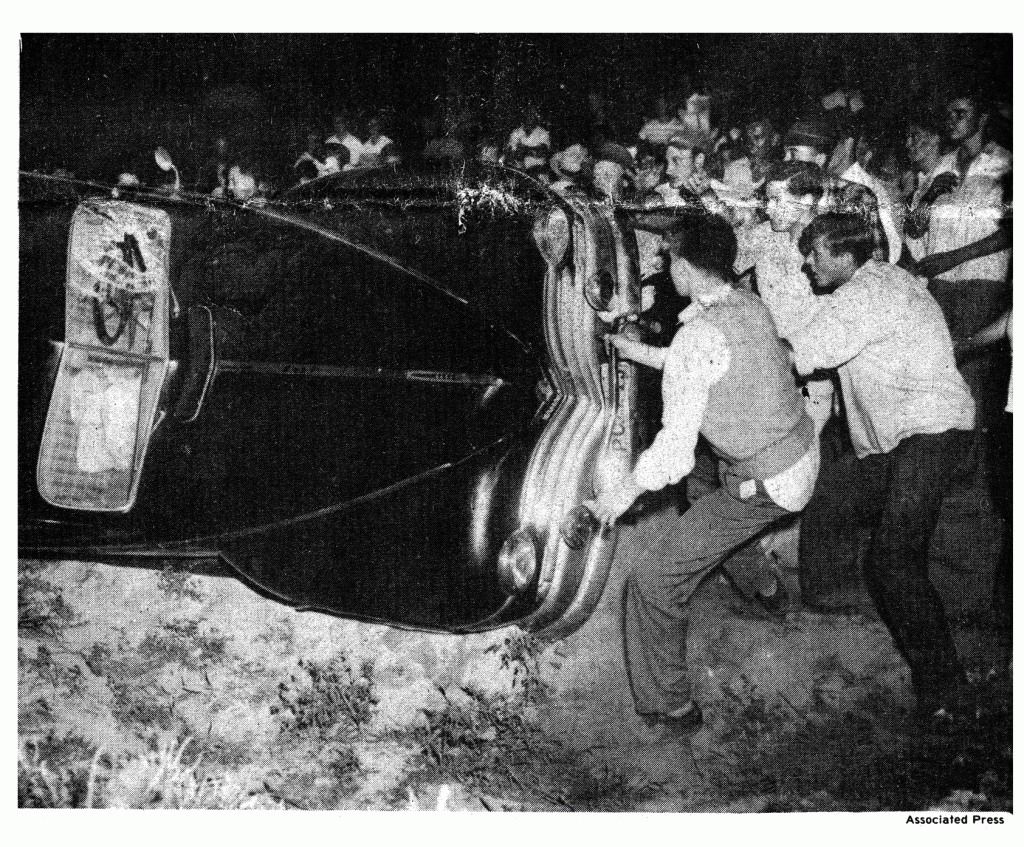
“Anybody got a rock?
There’s a window back here that needs to be opened!” 


— Woodie Guthrie joked and sang, “We Shall Not Be Moved,” when his car was surrounded by an angry mob after a performance in Peekskill, New York.  


The 1949 outdoor concert with Guthrie, Pete Seeger, Harry Belafonte and Paul Robeson, benefitting the Civil Rights Congress, prompted one of the ugliest days in music's history. Known as The Peekskill Riots, angry locals from Westchester County New York took to throwing racial slurs and rocks in response to Paul Robeson's scheduled performance at an open-air concert in Lakeland Acres, north of Peekskill, on September 4th, 1949.


*******

There is a long history of social protest through song in America. The civil rights movement used songs as an expression of dissent, and this tradition has been carried forward with every movement thereafter. Rooftop School began exploring this history with Marcus Shelby's oratorio, Soul of the Movement: Meditations on Dr. Martin Luther King, Jr. 

“With this music, a rich heritage from our ancestors who had the stamina and moral fiber to be able to find beauty in broken fragments of music, whose illiterate minds were able to compose eloquently simple expressions of faith and hope and idealism, we can articulate our deepest groans and passionate yearnings-and end always on a note of hope that God is going to help us work it out, right here in the South where evil stalks the life of a Negro from the time he is placed in the cradle.  Through this music, the Negro is able to dip down into wells of a deeply pessimistic situation and danger-fraught circumstances and bring forth a marvelous, sparkling, fluid optimism.  He knows it is still dark in his world, but somehow, he finds a ray of light”.

— Dr. Martin Luther King, Jr.


Thursday, August 1, 2013

Sing-along

sing-along — /sing euh lawng , long /, n. 1. an informal or unrehearsed singing of songs by a group of people, usually under the direction of a leader; songfest. 2. an occasion marked by such singing. Also, singalong. [1955 60; n. use of v. phrase sing along] … 

It was surprising to discover that the use of the verb phrase “sing-along” as a noun, first occured in 1955.  A little Internet research reveals that bandleader Mitch Miller recorded The Yellow Rose of Texas with a chorus of singers in 1955. The popularity of that number one Billboard hit then led to his first albums of standards, accompanied by lyrics that let people sing along. His television show, Sing Along with Mitch, aired from 1961-1966, inviting thousands of Americans at home to sing along with a bouncing ball - which they did, in the privacy of their own homes.

New advances in technology are enabling scientists and researchers to explore how the arts can assist with the social emotional health.  Today, brain research is exploring the impact of singing on mental health for the young and the old. First 5 California states that 90% of a child's  brain develops in the first five years of life.  Cognitive neuroscientist Julene Johnson, in partnership with the Community Music Center and the San Francisco Department of Aging and Adult Services is currently researching the impact of community singing on the health of older adults. 

At Rooftop School, Friday Sing-Along and the Rooftop Afterschool Chorus sessions are seeding the musical memory banks of our students.

Try singing along with these children’s songs about windows: 

is a silly mash up of different nursery stories. 

is a seasonal song sung by Rosemary Clooney & Gene Autry

is a song that can be done with a dance.

Mary Ann shares a wonderful pair of songs sung by Pete Seeger to the same melody: 
Fly Through My Window is a list song about birds — with verses about the robin, bluebird, crow, bobwhite, whip-poor-will, hummingbird and Seeger even incorporates their songs within the song.

Little bird, little bird, fly through my window
Buy molasses candy.

Fly through my window, my sugarlump
And buy molasses candy. 


To hear more bird song, visit the Cornell Lab of Ornithology Online Bird Guide http://birds.cornell.edu/onlineguide/ 

The melody is the same, but the words and purpose for the song are changed 

Little girl, little girl, see through my window
See what you can see

I see the rich
I see the poor
I see millions, millions more
Around the ringo-world-o

I see the the clever
I see the smart,
I see the folks who have no heart
Around the ringo-world-o

I see a world
Where you and me 
Can dwell in sweet serenity
Around the ringo-world-o


Tuesday, July 30, 2013

Progressive Lenses

The eyes are the windows to the soul 

— a proverb and some science

I went to my annual eye check up yesterday and learned that it’s time for progressive lenses!

Progressive lenses help you to see both far away and close up, all with the same pair of glasses.

A few years ago, this phoropter was made in cool colors like blue and orange.

This is a photo of the inside of my eye. The white spot is the retinal "cup" at the back of the eye, where the optic nerves go to the brain.

The optometrist can compare a new photo with one taken years ago to see if there are any changes to the inside of the eye.
   
Because I am getting progressive lenses, the centers of my lenses are marked to align with my pupils.

I used to wear contacts, but I had to stop because they were negatively impacting the health of my eyes.

My new glasses should be ready by the start of school!


Sunday, July 28, 2013

Mapping Out A Sky

Each summer, members of the Rooftop Art Committee meet to talk about the opportunities for arts learning that we see ahead, and we begin to identify the works of art for study that are available for community exploration.  We discuss possible themes that we hope our school community will enjoy exploring. Over the past 7 years, we have implemented these ideas and grown an arts education program known at Rooftop as "Art Is..."
Art Is... is a Rooftop art education program that uses works of art to provide an inexhaustible resource for exploration, reflection and understanding. The program actively engages students, supports learning across the curriculum, and builds critical thinking skills through “hands-on” art making, reflection and research.

Art Is... will bring works of art (music, dance, theater and visual art, with a focus on multicultural work) to all Rooftop students and develop partnerships between teachers, teaching artists, arts organizations and art parents to develop integrated, interdisciplinary curriculum that will support learning for all students.

Rooftop's Art Is... studies have framed areas of exploration, in hopes of helping the Rooftop school community to connect art and life with learning: 

Coming Together (2012-2013), Expression (2011-2012), Illumination (2010-2011), Innovation (2009-2010), Shaping Memory (2008-2009), Jazz (2007-2008), Asawa (2006-2007).

The choosing of the works of study is a purposeful act of curation. As we begin our eighth year of engaging the community through this model, we should note that we are now working in a time of great transition.  At the systemic level, the purposes, processes, challenges and successes of an educational system are being examined, and at the school site, new ways of teaching are being implemented. Of course, each new school year brings change as families and teachers enter and exit.

http://www.hbs.edu/pelp/framework.html
The SFUSD Strategic Plan Progress report puts forward this Theory of Change.
If we
• engage students, families and the community in this effort;
Then, every student who enrolls in our schools can achieve his or her maximum potential.
• deliver a rigorous core curriculum with high quality instruction and a results oriented equity mindset;
• invest in adult learning, leadership, and change; and
• engage students, families and the community in this effort;
Then, every student who enrolls in our schools can achieve his or her maximum potential.
This Theory of Change, created by the Harvard Business School, sets out to establish a formula for success with quantifiable educational outcomes. But what of the aspects of learning that are much harder to measure, and no less important to a life?

Important personal discoveries such as passion, wisdom, empathy and purpose.


ART IS A WINDOW

First Lady Claudia “Lady Bird” Johnson said, “Art is the window to man’s soul. Without it, he would never be able to see beyond his immediate world; nor could the world see the man within.”

After eight years of creating “Art Is...” studies, we have gathered quite a bit of information, resource materials and experience.  It’s a good time to take stock of things.  A letter written on September 11, 2006, when the program began, offered some thoughts about the role of the arts in shaping the soul of a community. 
When we make art, we leap without ever completely knowing how and where we will land. The detours, the myriad of choices, the surprises and the resulting illumination are the reasons why the arts can transform a life, or even a community.
Today, the works of art and the people who have come together to work are different, but hopefully, the passion and purpose for the art-making — the desire to transform the ordinary is still the same. 

With three weeks until the start of school, it’s time to go to the window and pull back the curtains.
Take a good look around and get started. Time to begin mapping out your slice of the sky.

Window to the Sky by seren*


Pausing on a Sunday

Chicago Shakespeare Theatre and The Art Institute of Chicago put together an unusual art-meets-life experience on an ordinary Sunday.

They removed some of the characters from a very familiar painting.

photo: Leo Burnett

Bit by bit,
Putting it together...
Piece by Piece-
Only way to make a work of art.
Every moment makes a contribution,
Every little detail plays a part.
Having just a vision's no solution,
Everything depends on execution:
Putting it together-
That's what counts!*


Some museum-goers noticed that there was something missing.


It's only new, though. for now,
And yesterday's forgotten.
Today it's all a matter of promotion,
But then —*

The event was dreamed up locally by Chicago ad agency Leo Burnett and shared globally via social media.

That is the state of the art, my friend,
That is the state of the art *

Drop by the Google Cultural Institute for a “State of the Art” view of La Grande Jatte.


*lyrics from “Putting It Together” from Sondheim’s Sunday In the Park with George.

Friday, July 26, 2013

When I Grow Up

A scenic design model of Matilda The Musical by Tony-nominated designer Rob Howell.

Matilda The Musical tells the story of an extraordinary little girl who decides that her story is going to be an astonishing one, despite a bad beginning filled with rotten parents, a terrifying school and a vicious head mistress.

In Act Two, the children imagine what adulthood is like and sing “When I Grow Up.”


When I Grow Up

Music and Lyrics by Tim Minchin
Book by Dennis Kelly
Based on the book Matilda by Roald Dahl, with illustrations by Quentin Blake

When I grow up,
I will be tall enough to reach the branches
That I need to reach to climb the trees
You get to climb when you're grown up.

And when I grow up,
I will be smart enough to answer all
The questions that you need to know
The answers to before you're grown up.

And when I grow up,
I will eat sweets every day,
On the way to work, and I will
Go to bed late every night.
And I will wake up
When the sun comes up, and I
Will watch cartoons until my eyes go square,
And I won't care 'cause I'll be all grown up.

When I grow up (x 4)...
I will be strong enough to carry all
The heavy things you have to haul
Around with you when you're a grown up.

And
When I grow up (x 3)...
I will be brave enough to fight the creatures
That you have to fight beneath the bed
Each night to be a grown up.

And when I grow up,
I will have treats every day,
And I'll play with things that mum pretends
That mums don't think are fun.

And I will wake up
When the sun comes up and I
Will spend all day just lying in the sun.
And I won't burn 'cause I'll be all grown up.
When I grow up...

(Ms. Honey:)
When I grow up,
I will be brave enough to fight the creatures
That you have to fight beneath the bed
Each night to be a grown up.

When I grow up...

(Matilda:)
Just because you find that life's not fair, it
Doesn't mean that you just have to grin and bear it.
If you always take it on the chin and wear it, nothing will change.
Just because I find myself in this story,
It doesn't mean that everything is written for me.
If I think the ending is fixed already,
I might as well be saying I think that it's OK,
And that's not right!

— lyrics via themusicallyrics.com

Sing-A-Long with the “School Song”


As her classmates arrive with the usual nervousness of a child going to school for the first time, the older children do nothing to dispel their fears, instead warning them that even putting in effort there, is a waste of energy ("School Song").


Transferring Energy: The Journey of Matilda


The creators of Matilda talk about the show's origins at the Royal Shakespeare Company in London and the transfer of the show across the pond to Broadway — from Playbill, “The Journey of Matilda”

Noses Pressed against the Glass

Skye, Henry and Smudge at the Window


A nose is to be nosey with.


— from Ruth Krauss and Maurice Sendak's Open House for Butterflies


Wednesday, July 24, 2013

Moon in My Window


*******

Moon in my window,
As you disappear,
Come again tomorrow:
I'll be here.

Oh, moon.
Ah, moon.
Hey, moon.

 — “Moon in My Window” from Sondheim & Rodgers' Do I Hear a Waltz?


The Cure

curation (n.) Look up curation at Dictionary.com
late 14c., from Old French curacion "treatment of illness," from Latin curationem (nominative curatio), "a taking care, attention, management," especially "medical attention," noun of action from past participle stem of curare "to cure" (see cure (v.)).
When speaking of the art of curation, it is interesting to note the roots of the word.


*******

Yesterday, at Opera Club Session #1 for Richard Wagner's 1843 opera, The Flying Dutchman, we learned about the opera from Peter Susskind.  After our presentation, we looked at photos of the set for the upcoming production at SF Opera, and suddenly that ghost of a feeling appeared. This work is a pretty interesting opera to consider, especially in terms of curation.
 
Susskind will also be giving the pre-opera lectures for the upcoming production of Jerome Kern and Oscar Hammerstein's Showboat, and he was in the process of thinking about his way into the work to prepare audiences to encounter the 1927 musical. There are echoes across the 84 years between the two works— the artistic desire to create Gesamtkunstwerk, “total artwork,” drove both Wagner and Hammerstein to experiment with the form of musical drama. A coupling offers an interesting way to illustrate the evolution of an art form, especially when viewed in context of the attitudes and culture of their respective times and creators.

Interesting too to compare the female characters in these two works - Senta in The Flying Dutchman and Julie in Showboat - to illustrate how women in love have been depicted through both the European opera and the American musical.  

In Wagner's opera, Senta encounters only a story and a portrait, but she still falls hard for The Flying Dutchman.
Look at her! 
Always before the picture!
Senta, art thou to dream away thy young life,
Contemplating this portrait?

GIRLS.
Hum and buzz! What cheerful sound!
Turn round the wheel, quick, quick, quick!
Spin the golden thread around!
Hum and buzz like magic trick!

SENTA.
Enough, now, of this spinning song
It hums and buzzes in my ear;
If I must join your busy throng,
Then sing the song I hold so dear.

The Spinning Chorus from Act II, Scene I by Richard Wagner, 
English translation from the Metropolitan Opera libretto 


A despondent Senta hurls herself off a cliff, in the opera's last scene.
Senta.
Be cheerful thy mind, be joyous thy heart!
Thine will I be until death shall us part!

*******

Director Francesca Zambello offered her insight on Showboat's Julie LaVerne, the secretly bi-racial supporting character who also comes to a doomed end.“Julie is the fulcrum of the show, because she brings the dramatic issue that changes everything.”  


Oh listen, sister
I love my mister man and I can't tell you why
Dere ain't no reason why I should love dat man
It must be sumpin' dat de angels done plan

When the audience hears Jerome Kern's music & Oscar Hammerstein II's lyrics from Showboat,  they know that this feeling of jubilation is short-lived. Still we can't help lovin' the display of optimism— there is both joy and pain in the blues. In the time of a segregated America, Julie loves a white man and their marriage is a crime. There is something interesting about this American twist on the age-old scenario of doomed romantic love. 

By the time Julie sings the torch song, “Bill,” the audience knows that “Misery's comin' around.” 

I used to dream that I would discover
The perfect lover someday.
I knew I'd recognize him if ever
He came 'round my way.
I always used to fancy then
He'd be one of the God-like kind of men
With a giant brain and a noble head
Like the heroes bold
In the books I've read.
But along came Bill...

*******

By the time Hammerstein's protege Stephen Sondheim writes his 1984 musical, Sunday in the Park with George, musical dramas were ready to experiment with alternative endings to doomed love affairs.  

Dot, the unhappy lover of the painter George Seurat, steps out of the fixed, framed canvas to embrace a new future. She is the one who chooses to end their relationship by leaving. 
At the end of the Second Act, the passage of time offers a whole new perspective that frames her choice in a whole new way.

Look at what you've done,
Then at what you want,
Not at where you are,
What you'll be
Look at all the things
You gave to me
Let me give to you
Something in return
I would be so pleased...